
We see and use design every day, whether it be in the digital aspect or in our everyday lives. Design is integrated in many ways. Wikipedia defines design as “the concept of or proposal for an object, process, or system. The word design refers to something that is or has been intentionally created by a thinking agent, and is sometimes used to refer to the inherent nature of something – its design.”
In Digiweb’s article, Joshua David McClurg-Genevese explores the principles of design, delving into the basics of web design and its fundamental concepts. He examines the core principles of balance, rhythm, proportion, dominance, and unity. The article emphasizes the importance of understanding these foundational concepts in web design. Genevese also touches on the Gestalt theory and other concepts such as closure, continuance, and related ideas like contrast, positive and negative space, the rule of thirds, visual center, and typography.

Balance – Balance refers to the distribution of weight and physical structure within a certain design. It ensures that no element overwhelms another, creating a cohesive appearance in the design. Balance typically comes in two forms: symmetrical and asymmetrical.
Symmetrical – Symmetrical balance refers to when elements are evenly distributed around a central vertical or horizontal axis, resulting in an orderly design. Under normal circumstances, symmetrical balance assumes identical forms on both sides of the axis.
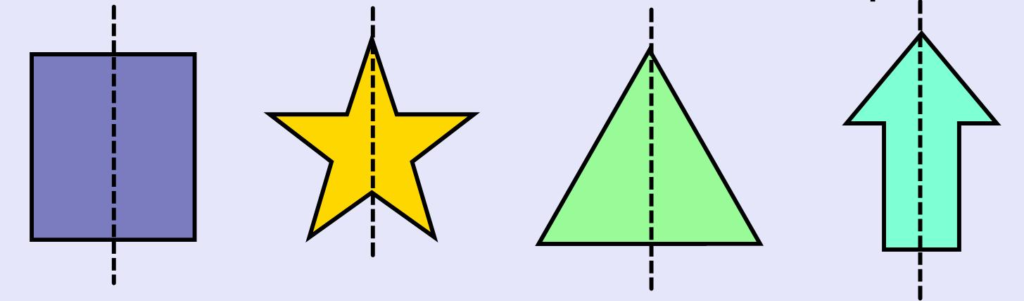
Asymmetrical – Asymmetrical balance refers to when the weight and composition are not evenly distributed along a central axis but still achieve equilibrium. This type of balance can create more dynamic and interesting designs because objects are arranged in a different composition with varying sizes.
Rhythm – Rhythm is a design principle that involves the repetition or alteration of elements to create movement and patterns. There are multiple types of rhythm, each invoking different emotions.
Regual Rhythm– elements are repeated at consistent intervals, establishing a predictable and steady visual flow.
Flowing Rhythm – Mimics natural, organic movement, leading the eye in a more fluid manner. It evokes calm and relaxation.
Progressive Rhythm – Elements are repeated with gradual changes, such as increasing in size or color intensity, to create a sense of progression and evolution.

Proportion – Proportion refers to the relative size and scale of different elements within a design. Proper proportion ensures that elements relate well to one another and to the design as a whole. Effective proportion can highlight elements and contribute to the overall harmony of a design.

Dominance – Dominance refers to the degrees of emphasis on different elements in a design, highlighting the more important elements to draw attention and create a focal point. It can include varying size, color, or placement in a design to establish a visual hierarchy, which then guides the user through the content.
Unity – Unity refers to the relationship and cohesive quality of the design as a whole that makes the design feel complete and harmonious. Achieving unity involves ensuring that all elements of a design work together, creating a consistent and cohesive visual experience. This can be accomplished through the use of consistent color schemes, typography, and alignment. Incorporating these principles thoughtfully can significantly enhance the effectiveness of a web design. Focusing on balance, rhythm, proportion, dominance, and unity ensures that designers can create websites that are both user-friendly and functional.
Gestalt Theory – Gestalt theory emphasizes that humans perceive objects as a unified whole, associated with the saying, “The whole is greater than the sum of the parts.” This principle helps explain how people interpret complex images and patterns quickly. Some basic ideas of Gestalt theory are closure, continuance, similarity, proximity, and alignment.

Continuance – The idea that once you start to look in one direction, you will continue to do so. The eye is drawn along paths, lines, or curves, preferring continuous, smooth lines rather than abrupt changes in direction.
Similarity, Proximity, and Alignment – Items of similar size, shape, and color can be grouped together or become part of a pattern.
Web design can be overwhelming because there are so many options when it comes to creating something on the web. Design principles play a crucial role in making a visually appealing and effective web layout. Understanding how users perceive and organize information can help designers use the principles mentioned above to enhance the look, usability, and guide user interaction. By applying these principles thoughtfully, designers can ensure that their designs not only look good but are also easy to navigate and intuitive for the user.